
Allissa hosts Issa Rae at USC
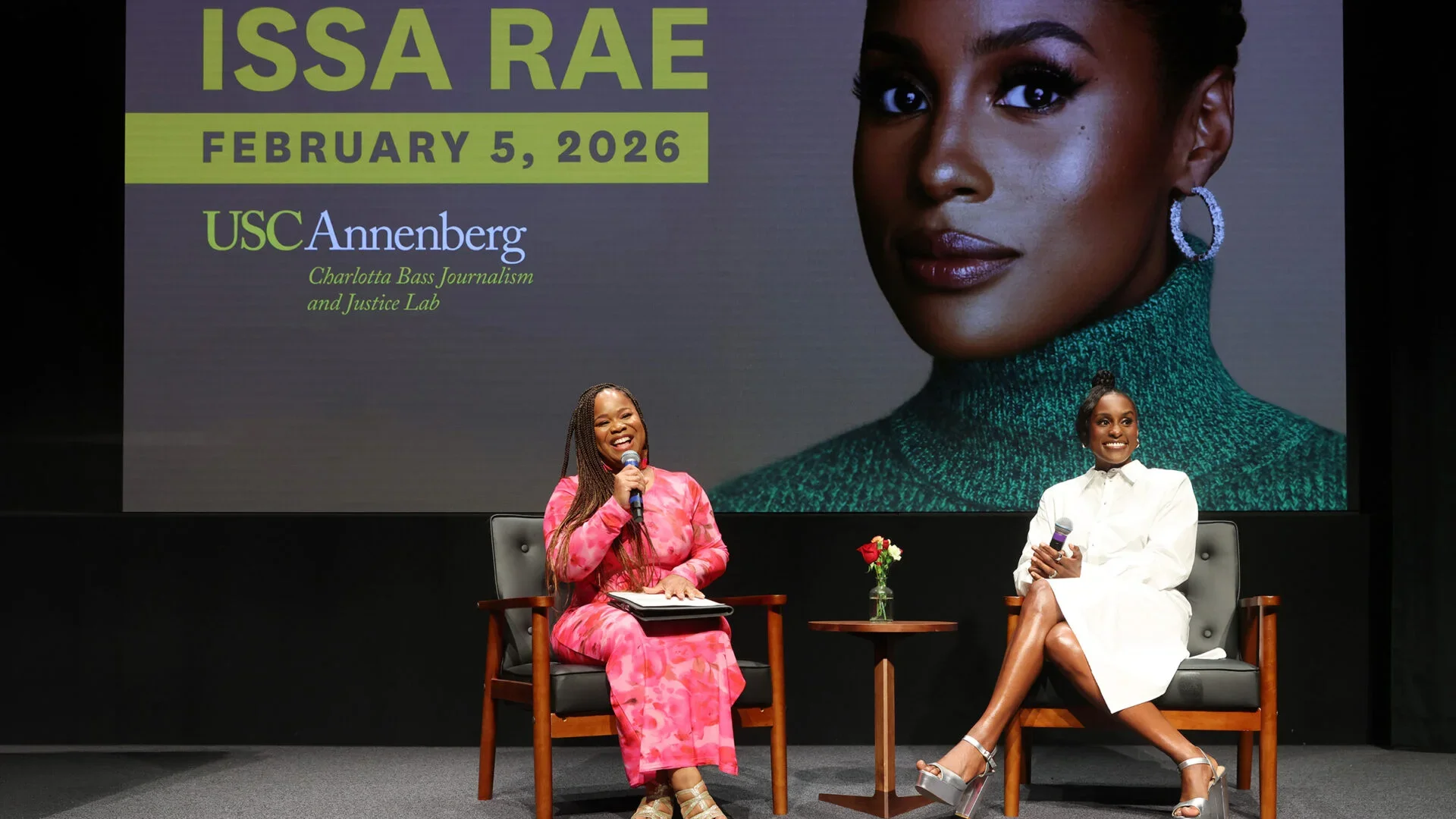
There are moments in academic life that feel larger than the institution hosting them. Bringing Issa Rae to USC this year was one of those moments for me.
Long before she became a household name, Issa Rae represented possibility. She represented what could happen when a Black woman decided her stories deserved to exist before traditional media institutions gave her permission. I remember watching The Misadventures of Awkward Black Girl years ago and immediately recognizing that something profound was happening. The internet had cracked open a new pathway for Black storytelling, and Issa walked through it with honesty, awkwardness, humor, and an unapologetic commitment to portraying Black interior life in ways television rarely allowed.
As someone who studies Black media innovation and the ways marginalized communities use technology to build their own narrative infrastructures, I have always understood Issa’s work as much bigger than entertainment. She changed Black media. She helped redefine what creative autonomy could look like in the digital age. She proved that web series, social media, and online communities were not merely stepping stones to legitimacy; they were legitimate cultural spaces capable of producing entirely new media ecosystems.
That is why hosting her through the USC Charlotta Bass Journalism & Justice Lab felt deeply personal and intellectually meaningful to me.
When I walked onto that stage with Issa and looked out at the packed auditorium full of USC students, I felt overwhelmed in the best possible way. The energy in the room was electric. Students were leaning forward before the conversation even began. Many of them had grown up with Issa’s work. For some, Insecure and Awkward Black Girl were the first times they saw Black awkwardness, vulnerability, ambition, friendship, and creative experimentation treated with care rather than stereotype.
What moved me most was knowing our students were not just looking at a celebrity. They were looking at a blueprint.
They were witnessing someone who built her own lane when no clear lane existed. Someone who turned digital experimentation into institutional power. Someone who protected her voice while navigating industries that often reward assimilation over originality.
Throughout the evening, I kept thinking about Charlotta Bass herself—the pioneering Black newspaper publisher for whom our lab is named. Issa embodies that same spirit of institution-building. She understands that ownership matters. Platforms matter. Narrative control matters. And she has consistently used her influence to create opportunities for other Black creatives rather than simply securing visibility for herself.
Watching our students listen to her talk about self-doubt, internet creativity, collaboration, and trusting her instincts reminded me why I founded the Bass Lab in the first place. I wanted students to see that media could be more than content production. It could be world-building. It could be public memory. It could be liberation work.
By the end of the night, I felt incredibly grateful—not just because Issa Rae visited USC, but because our students got to see what Black creative possibility looks like up close. They got to witness someone who transformed uncertainty into innovation and storytelling into infrastructure.
And honestly, so did I.